Paint has quietly become one of the most strategic design decisions in real estate. It is no longer just about covering walls with a safe neutral. Today’s interior paint trends are tied to emotion, identity, architecture, and even buyer psychology. The colors gaining traction in 2025 are warmer, richer, and more intentional than the cool grays that dominated the last decade.
Designers and paint companies are leaning into tones that feel restorative, grounded, and deeply personal. Sherwin-Williams, Benjamin Moore, HGTV Home, Behr, and Homes & Gardens have all pointed toward palettes inspired by nature, nostalgia, and understated luxury. (HGTV)
For homeowners preparing to sell, this matters because paint remains one of the highest-return improvements you can make before listing. For buyers moving into a new home, paint placement can reshape the entire emotional experience of a space before furniture is ever unpacked.
The Biggest Interior Paint Trends Right Now
1. Earthy Greens and Blue-Greens
Soft sage, muted eucalyptus, moss, and mineral blue-greens are dominating design forecasts. HGTV Home by Sherwin-Williams named “Quietude” its 2025 Color of the Year, describing it as a calming blue-green that creates a spa-like atmosphere. (HGTV)
Popular shades include:
- Quietude by HGTV Home
- Silver Sage
- Grenada Green
- Rocky River
 Olive green tones
- Chalky sage greens

These colors are appearing in:
- Primary bedrooms
- Bathrooms
- Kitchen cabinetry
- Mudrooms
- Home offices
- Accent ceilings
Why people love them:
They soften modern architecture while still feeling sophisticated. They also photograph beautifully in natural light, which matters tremendously in online listings.
Best use as a seller:
Use these shades selectively. A muted green vanity, kitchen island, or office accent wall adds character without overwhelming buyers.
Best use as a buyer:
These tones work exceptionally well for creating emotional transition spaces after a move. Bedrooms and bathrooms benefit most because the colors naturally reduce visual tension and make spaces feel restorative. (Real Simple)
2. Warm Neutrals Replacing Cold Gray
The all-gray interior trend is fading. Designers are moving toward layered neutrals with warmth and complexity.
Trending neutrals include:
- Malabar
- Nomadic Desert
- Swiss Coffee
- White Dove
- Pale Oak
- Alabaster
- Greige-taupe blends
- Creamy whites
These are showing up in:
- Whole-home palettes
- Open-concept living areas
- Hallways
- Exterior transitions
- Luxury resale homes
What changed:
Buyers want homes that feel livable and welcoming instead of sterile. Warm whites and taupes photograph softer and pair better with wood flooring, brass finishes, and natural textures.
Best use as a seller:
If preparing a home for market, warm off-whites are still the safest investment. They create broad appeal while making rooms feel brighter and more expensive.
Best use as a buyer:
Paint the main living spaces first. A cohesive warm neutral throughout the house immediately creates flow and makes unpacking feel less chaotic. (Good Housekeeping)
3. Saturated Reds, Browns, and Oxblood Tones
One of the biggest surprises in current paint trends is the return of dramatic reds and brown-based jewel tones.
Benjamin Moore’s Cinnamon Slate and Behr’s Rumors helped push this movement into mainstream interiors. (Love Remodeled)
Trending shades include:
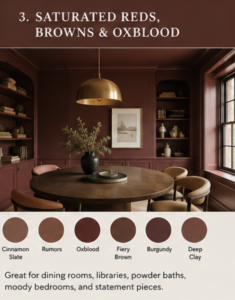 Cinnamon Slate
- Rumors
- Oxblood
- Fiery Brown
- Burgundy
- Deep clay reds
- Brown-plum blends

Designers are using these colors in:
- Dining rooms
- Powder baths
- Libraries
- Moody bedrooms
- Cabinetry
- Statement ceilings
Why they work:
These shades create intimacy and emotional richness. In smaller spaces especially, darker saturated colors can make a room feel intentionally designed instead of simply small.
Best use as a seller:
Use restraint. Powder rooms and dining rooms are the safest places for bold saturated paint because buyers interpret them as curated moments rather than permanent commitments.
Best use as a buyer:
If you want personality immediately after moving in, paint one emotionally high-impact room first instead of the entire home. A dramatic office, library, or dining room creates instant ownership and identity. (Real Simple)
4. Soft Yellows and Botanical Citrus Tones
Muted yellows are quietly emerging again, though far softer than the Tuscan gold era of the early 2000s.
Design publications are calling this movement “soft citrus.” (Country Living)
Popular tones include:
- Bosc Pear

- Convivial Yellow
- Ochre
- Buttercream
- Soft chartreuse
- Botanical yellow-green
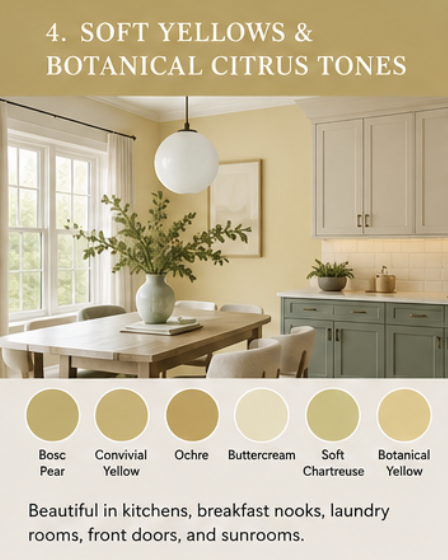
Where they are being used:
- Breakfast nooks
- Laundry rooms
- Kitchens
- Front doors
- Ceilings
- Sunrooms
Why designers love them:
These shades reflect light beautifully and create warmth without relying entirely on beige.
Best use as a seller:
Avoid bright yellows on full walls. Instead, use them as accents through cabinetry, ceilings, or decor styling for listing photography.
Best use as a buyer:
A soft yellow kitchen or breakfast area can make a new house feel cheerful and lived-in quickly, especially in homes with limited natural light. (Country Living)
Where Designers Are Actually Using Paint Differently
Paint placement matters as much as the color itself now.
Some of the strongest trends include:

Painted Ceilings
Designers are increasingly using color overhead to create intimacy and architectural depth. Dining rooms, bedrooms, and offices benefit most. (HGTV)
Color Drenching
This involves painting walls, trim, cabinetry, and sometimes ceilings the same tone. It works especially well in:
- Libraries
- Offices
- Powder baths
- Bedrooms
Two-Tone Applications
Warm neutral upper walls paired with deeper lower cabinetry or wainscoting create dimension without visual clutter.
Accent Architecture
Rather than generic accent walls, designers are highlighting:
- Built-ins
- Arches
- Fireplace surrounds
- Interior doors
- Kitchen islands
These approaches feel more sophisticated and intentional.
The Smartest Paint Strategy Before Selling a Home
If you are preparing a property for market, think strategically rather than creatively.
The goal is not self-expression. The goal is emotional accessibility.
Prioritize:
- Warm whites
- Soft taupes
- Greige with warmth
- Light sage accents
- Consistent flow room to room
Avoid:
- Highly personalized murals
- Bright primary colors
- Heavy black walls
- Cool gray overload
- Contrasting trim colors
The homes that perform best today often feel calm, cohesive, and lightly layered.
Paint should support:
- Natural light
- Flooring tones
- Cabinet finishes
- Photography
- Architectural strengths
A buyer should walk in and feel possibility, not someone else’s personality.
The Best Paint Strategy After Buying a Home
Most buyers make one mistake immediately after moving in: trying to paint everything at once.
Instead, approach paint in layers.
First:
Paint the spaces that affect emotional regulation.
- Primary bedroom
- Bathroom
- Living room
Second:
Create continuity in shared spaces.
- Hallways
- Kitchen
- Entryways
Third:
Add personality in smaller controlled areas.
- Powder baths
- Offices
- Dining rooms
This creates a home that evolves intentionally rather than becoming visually fragmented.
Final Thoughts
The strongest paint trends today are not about chasing dramatic color for attention. They are about creating emotional environments that feel grounded, warm, and deeply livable.
That shift reflects something larger happening in housing and design. People want homes that feel restorative again.
Whether you are preparing a property for market or stepping into a new home yourself, paint is one of the most affordable ways to completely reshape how a space feels. Used thoughtfully, it can elevate architecture, improve resale appeal, and help transform a house into a place that genuinely feels settled.
The most timeless homes are rarely the loudest. They are the ones where color feels intentional, balanced, and connected to the way people actually want to live today.
(HGTV)